Computational Research
Valley Fever
Structure-guided screening of transporter binding pockets.
Can structural models and short molecular-dynamics simulations help prioritize binding pockets in Coccidioides immitis ABC transporters?
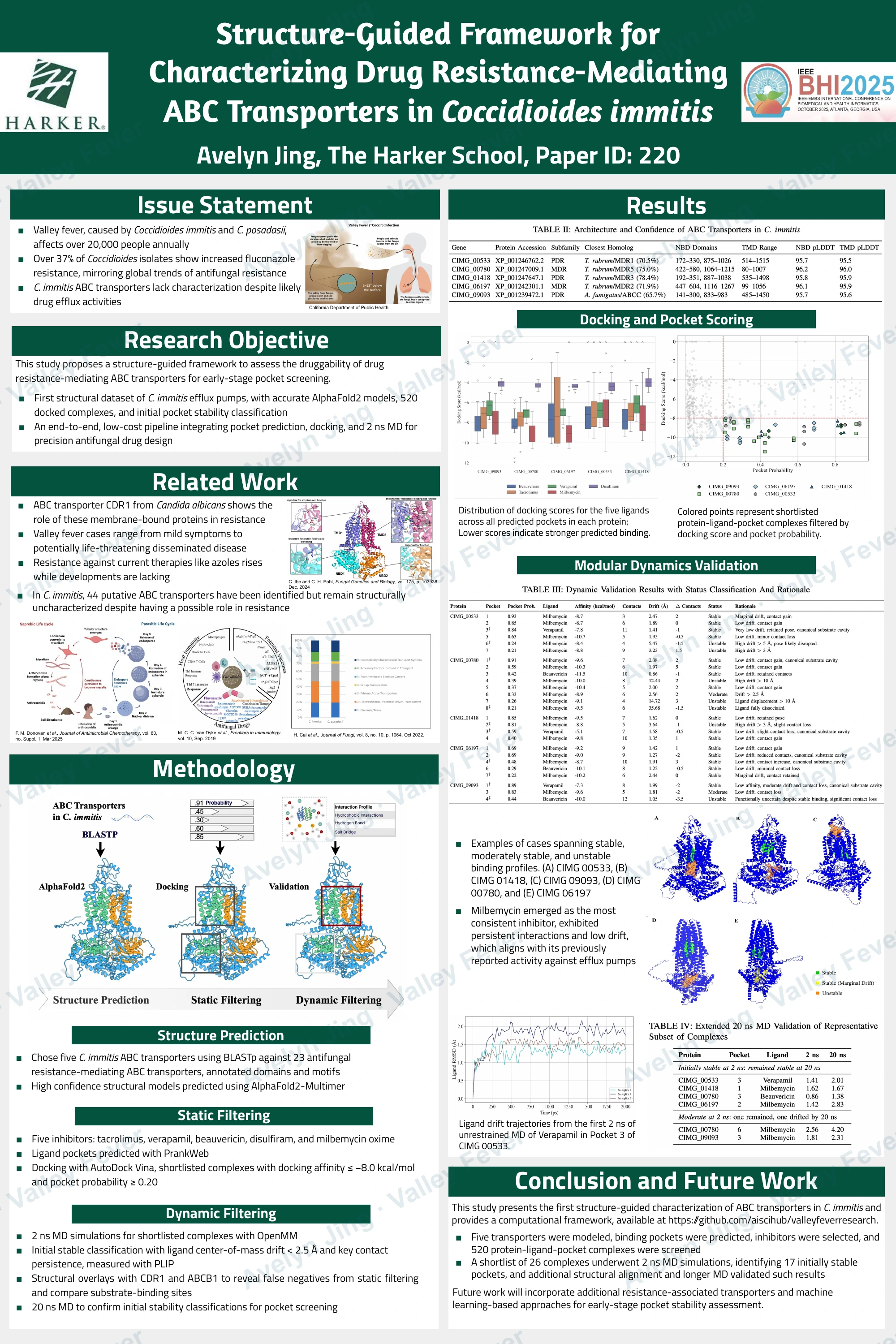
Valley Fever is a fungal infection with about 20,000 reported U.S. cases a year and rising antifungal resistance.
The ABC transporters that may pump drugs out of Coccidioides immitis cells had not been structurally characterized. This study predicts the structures of five of them, docks five known inhibitors into their predicted pockets, and uses short molecular-dynamics simulations to decide which pockets deserve further study.
Key Results
Five C. immitis ABC transporters · five candidate inhibitors
- Complexes docked
- 520
- Five transporters, their predicted pockets, and five ligands, docked with AutoDock Vina
- Shortlisted for simulation
- 26
- Docking score ≤ −8.0 kcal/mol and pocket probability ≥ 0.20, plus alignment with reference structures
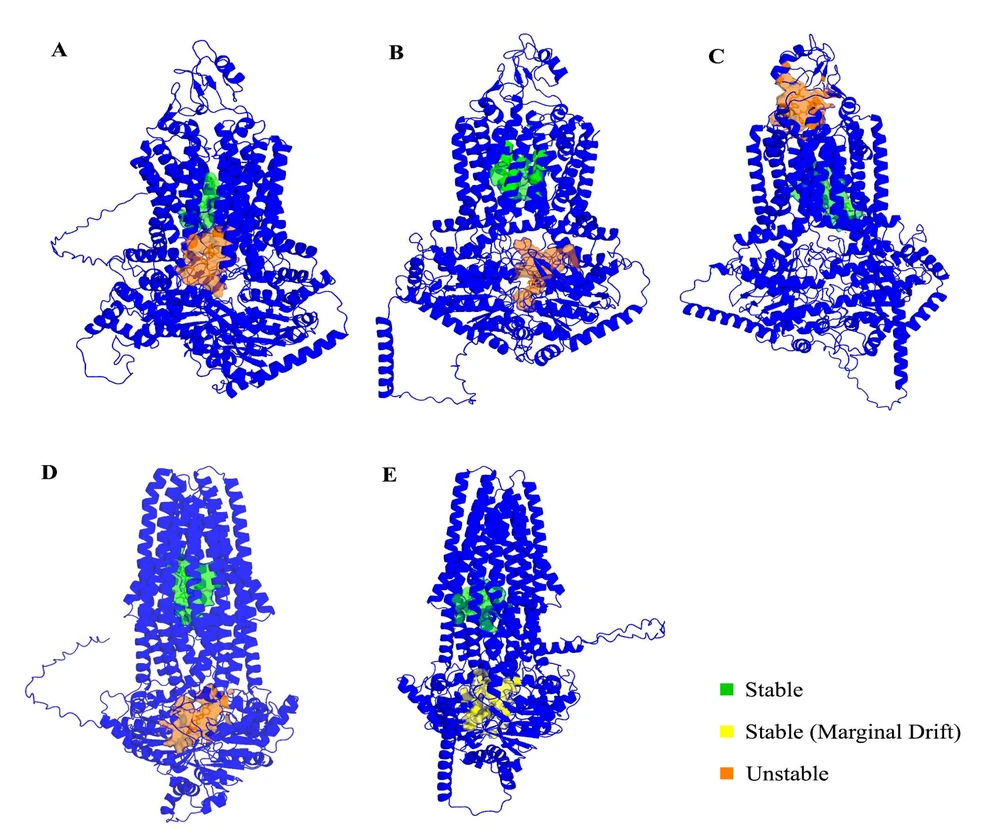
- Initially stable pockets
- 17
- Ligand drift under 2.5 Å with contacts retained in 2 ns simulations, run in triplicate
Extended 20 ns simulations of a representative subset confirmed that pockets screened as stable generally persisted. Milbemycin oxime was the most consistent binder.
How It Works
Each stage keeps only the complexes worth studying further.
Select transporters
Five C. immitis ABC transporters, found by BLASTp search against 23 resistance-mediating reference proteins.
Predict structures
AlphaFold2 models with a mean confidence score (pLDDT) above 95.
Dock ligands
PrankWeb pockets and five known inhibitors, docked with AutoDock Vina: 520 complexes.
Static filter
Docking score and pocket probability thresholds, checked against reference structures: 26 complexes.
Dynamic filter
2 ns molecular dynamics, keeping low ligand drift and retained contacts: 17 stable pockets.
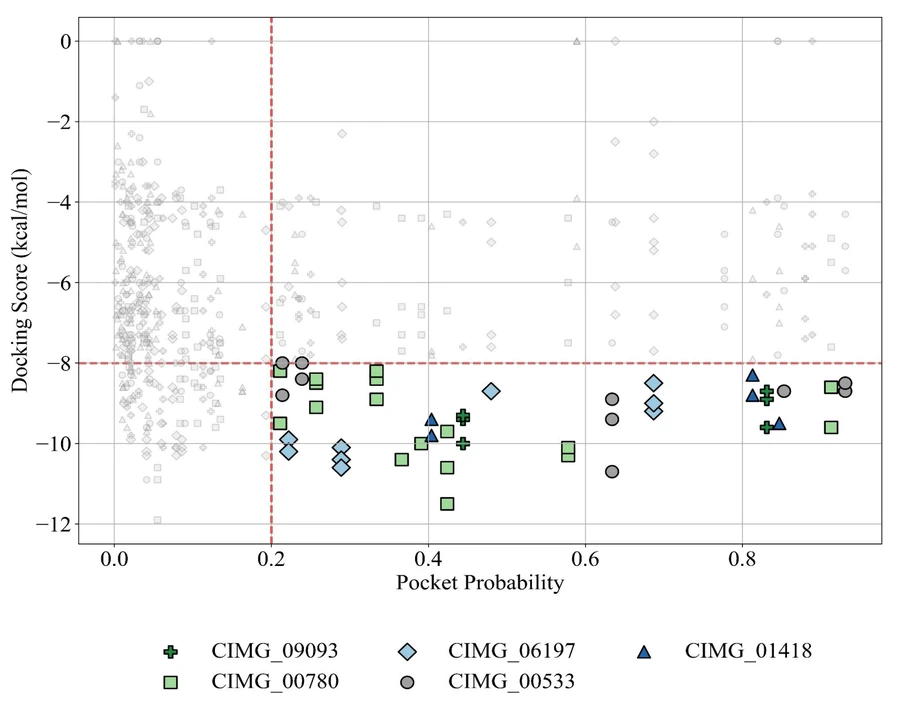
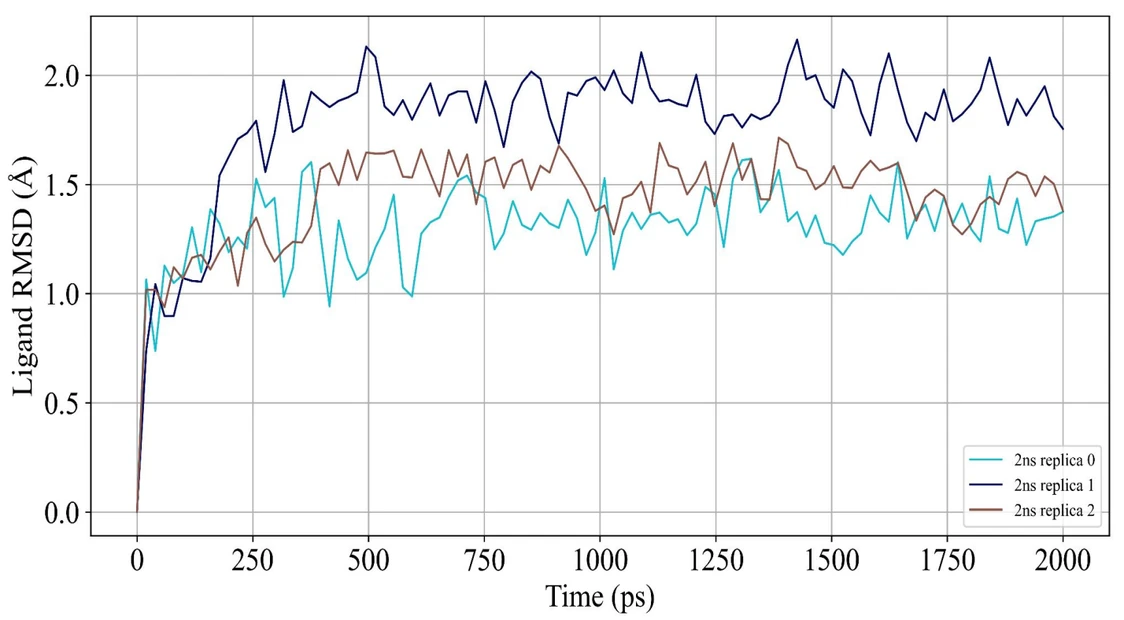
Figures from the research poster.
Short simulations support early-stage pocket prioritization; they do not establish long-term stability, functional inhibition, or treatment efficacy.
What I Did
I developed the structure-guided screening workflow, modeled the transporter structures, analyzed the docking and molecular-dynamics results, and wrote the paper as its sole author.
- Selected five transporters by homology search
- Predicted and assessed the protein structures
- Docked 520 protein–ligand–pocket complexes
- Ran and analyzed the molecular-dynamics simulations
- Compared pockets with reference transporter structures
- Wrote the paper and released the code and dataset